
How to Choose Oxford Fabric for Backpacks
A practical sourcing guide to fiber, denier, GSM, coatings, water resistance and test methods for selecting Oxford fabric for backpacks.
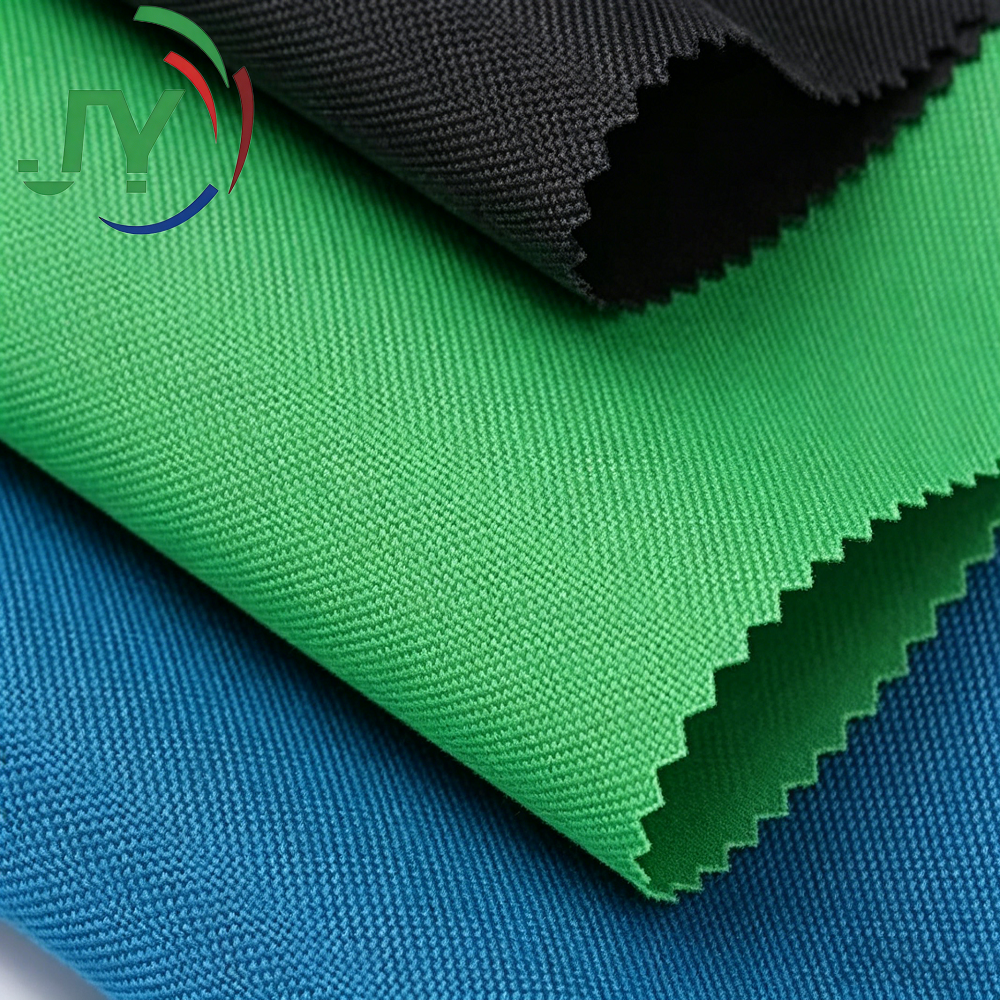
Choosing Oxford fabric for backpacks involves more than selecting a denier number. Buyers should evaluate the fiber composition, yarn size, finished weight, weave, coating or lamination, water-resistance target and verified test performance.
For many school, travel, outdoor and everyday backpack projects, 600D polyester Oxford fabric can be a practical material to evaluate. However, there is no single fabric that is suitable for every backpack. The correct specification depends on the expected load, abrasion exposure, weather conditions, product design, target price and required testing.
This guide explains how sourcing managers, backpack brands and product developers can select an appropriate Oxford fabric and prepare a clear specification for their supplier.
What Is Oxford Fabric?
Oxford fabric refers to a family of woven fabrics rather than one fixed material specification. It can be made from polyester, nylon or other fibers and supplied in different yarn sizes, weights, weave structures and finishes.
Oxford fabrics used for bags and backpacks are often coated or laminated to provide additional water resistance, stiffness or protective performance.
When comparing materials, buyers should not rely on the words “Oxford fabric” alone. A complete fabric description should include:
- Fiber composition
- Warp and weft yarn specification
- Fabric weight
- Weave structure
- Usable width
- Coating or lamination
- Color requirements
- Required test methods
- Target performance values
Two fabrics carrying the same 600D description may perform differently if their weave density, finished weight or coating construction is different.
Start with the Backpack’s Intended Use
Before choosing a fabric, define how the finished backpack will be used.
A lightweight daypack, school backpack, travel bag and heavy-duty equipment backpack do not necessarily need the same material. Consider the following questions:
- How much weight will the backpack carry?
- How frequently will it be used?
- Will it be used indoors, outdoors or in both environments?
- Will the backpack be exposed to rain or wet ground?
- Which panels will experience the most abrasion?
- Is low weight more important than stiffness?
- Will the fabric need printing or custom color matching?
- Will the seams be taped or otherwise sealed?
- Which performance tests must the finished product pass?
These questions help the fabric supplier recommend a construction based on the actual application rather than a general product name.
Polyester or Nylon Oxford Fabric?
Polyester and nylon are both commonly considered for backpack materials. However, fiber type alone does not determine the performance of the finished fabric.
The result also depends on:
- Yarn specification
- Weave density
- Fabric weight
- Coating or lamination
- Finishing process
- Sewing construction
- Test conditions
Polyester Oxford fabric is widely evaluated for school bags, travel backpacks, luggage, tool bags and general outdoor equipment. Nylon fabrics are also available when a buyer requires a different weight, hand feel or technical construction.
Instead of selecting a material from the fiber name alone, compare physical samples and request test data for the exact finished construction.
Understand Denier Before Comparing Backpack Fabrics
Denier, usually abbreviated as “D,” describes the linear density of a yarn. Common backpack materials may be described as 420D, 600D, 900D or 1000D.
A higher denier indicates a heavier yarn, but it does not automatically mean that the finished fabric will have better performance in every test.
Denier does not directly tell you:
- The finished GSM
- The weave density
- The coating weight
- The abrasion-test result
- The tearing-strength result
- The finished backpack weight
For example, two 600D polyester Oxford fabrics may have different finished weights, weave densities and coatings. They should therefore be compared using complete specifications and agreed test results.
Buyers who want to understand the differences among common constructions can also read our guide to 420D vs. 600D vs. 900D polyester Oxford fabric.
Check GSM, Weave and Usable Width
GSM means grams per square meter. It describes the finished fabric weight, including the effects of the fabric construction and finishing process.
GSM should be reviewed together with denier. A fabric with heavier yarn is not necessarily the heavier finished material if its construction or finish is different.
The weave also affects appearance, hand feel and physical performance. Plain weave is a common structure for polyester Oxford fabric because it provides a stable and practical construction for many bag applications.
Usable width is another important purchasing detail. Buyers should confirm the usable fabric width—not only the total roll width—when calculating consumption and preparing cutting plans.
A complete specification might read:
100% polyester, 600D × 600D, plain weave, 315 GSM, 150 cm usable width, PU coating.
This provides much more useful sourcing information than the description “600D Oxford” alone.
Choose the Right Coating or Lamination
The back of an Oxford fabric may be coated or laminated according to the intended application.
PU Coating
PU coating is frequently used on polyester Oxford fabrics for backpacks, luggage, tents and outdoor equipment. The coating can provide additional water resistance and affect the hand feel of the fabric.
The required coating construction should be selected according to the buyer’s performance target, sewing process and finished-product design.
PVC Coating
PVC coating may be considered when the project requires a different level of stiffness, finished weight or protective performance.
Because PVC coating changes the fabric’s hand and overall construction, buyers should approve a physical sample before placing a bulk order.
TPU Lamination
TPU lamination is different from a conventional PU coating. In this construction, a TPU film is laminated to the base fabric.
TPU-laminated fabrics may be considered for applications requiring a different level of water protection or airtight construction. Final suitability depends on the film, bonding system, seams and agreed testing requirements.
Learn more in our guide to PU coating vs. TPU lamination.
Water-Repellent, Water-Resistant or Waterproof?
These terms should not be used interchangeably.
A water-repellent surface treatment can help water form droplets on the face of the fabric. A coating or lamination can help the material resist water penetration. However, the water performance of the finished backpack also depends on:
- Seams
- Stitching holes
- Zippers
- Closures
- Binding
- Seam tape
- Backpack construction
A fabric that resists water penetration does not automatically make the completed backpack waterproof.
Buyers should specify a measurable test target instead of relying only on the phrase “100% waterproof.” The specification should identify:
- The required test method
- The target value
- The conditioning procedure
- Whether the material will be tested before or after aging
- Whether the requirement applies to the fabric or the finished backpack
AATCC TM127 is one recognized method for evaluating a fabric’s resistance to water penetration under hydrostatic pressure.
Evaluate Abrasion, Tear and Breaking Strength
Backpack materials may be exposed to rubbing, pulling and concentrated stress. High-stress areas include the bottom, corners, strap attachments and loaded seams.
Terms such as “high-strength,” “abrasion-resistant” and “tear-resistant” describe the intended performance, but buyers should request numerical test results under an agreed method when these characteristics are important.
Examples of recognized textile test methods include:
- ASTM D3884 for abrasion resistance
- ASTM D1424 for tearing strength using a falling-pendulum method
- ASTM D5034 for breaking strength and elongation using the grab test
The buyer and supplier should agree on the test method, specimen preparation and target result before bulk production.
No fabric should be described as meeting a particular performance level until the exact finished construction has been tested and confirmed.
Consider Different Fabrics for Different Backpack Panels
A backpack does not always require the same fabric in every area.
Product developers may use one material for the main body and a heavier or reinforced construction in areas that experience greater wear.
These areas can include:
- Bottom panels
- Lower side panels
- Corners
- Shoulder-strap attachment points
- Tool compartments
- Equipment-contact surfaces
This material zoning approach can help balance weight, durability and cost.
The overall performance of the backpack also depends on the lining, reinforcement, webbing, thread, stitching pattern and seam design. Selecting a stronger outer fabric cannot compensate for weak seams or insufficient reinforcement.
Is 600D Polyester Oxford Fabric Suitable for Backpacks?
For many everyday, school, travel and outdoor backpack projects, 600D polyester Oxford fabric is a practical construction to evaluate during product development.
Junyi Textile’s 600D polyester Oxford fabric has the following standard specification:
- Product: 600D Polyester Oxford Fabric
- Composition: 100% polyester
- Yarn specification: 600D × 600D
- Weave: Plain weave
- Finished weight: 315 GSM
- Usable width: 150 cm
- Standard finish: PU coating
- Optional constructions: PVC coating or TPU lamination
- Standard colors: Black, white, brown and navy blue
- Custom colors: Available according to buyer-provided color reference
- Standard MOQ: 800 meters
- Sample: Free fabric sample available
- Sample lead time: Normally 3–7 days
- Bulk lead time: Approximately 10–15 days after specification and color approval
The material is intended for applications including backpacks, luggage, tents and outdoor equipment.
Optional waterproof, flame-retardant or UV-resistant performance can be discussed according to the specific construction. Any required performance standard or numerical value must be confirmed through testing of the finished fabric.
The 600D construction should be treated as a sampling option rather than a universal recommendation. Buyers should evaluate it against their backpack design, target weight, sewing process and testing requirements.
What Should Buyers Check on a Fabric Sample?
Before approving a material for bulk production, check the physical sample and use it in a backpack prototype.
A useful approval checklist includes:
- Fiber composition
- Warp and weft yarn specification
- Finished GSM
- Usable width
- Weave consistency
- Surface appearance
- Approved color under agreed lighting
- Hand feel and stiffness
- Coating or lamination appearance
- Cutting and sewing behavior
- Seam appearance
- Needle-hole behavior
- Abrasion-test result
- Tearing-strength result
- Breaking-strength result
- Water-resistance result
- Performance after any required aging
- Finished backpack prototype performance
The approved fabric sample should be retained as a reference for bulk production.
Questions to Send Your Oxford Fabric Supplier
Before requesting a quotation, provide your supplier with the following information:
- Backpack type and end use
- Preferred polyester or nylon construction
- Target denier and GSM
- Required usable width
- Target color or color reference
- Coating or lamination requirement
- Water-resistance target
- Required abrasion, tear or breaking-strength tests
- Flame-retardant or UV requirements, if applicable
- Estimated order quantity
- Packaging requirements
- Target delivery schedule
The more complete the sourcing brief is, the easier it will be for the supplier to recommend an appropriate fabric construction and prepare a relevant sample.
Conclusion
The best Oxford fabric for a backpack is not simply the material with the highest denier. Buyers should compare the complete construction, including fiber, yarn specification, GSM, weave, coating or lamination and verified test performance.
For many general-purpose backpack programs, 600D polyester Oxford fabric provides a practical starting point for sampling. The final selection should still be confirmed through material testing and a finished backpack prototype.
Explore Junyi Textile’s Oxford fabric collection and bags and backpacks fabric solutions.
To evaluate a material for your next backpack project, request a fabric sample and provide your required construction, color, finish and testing targets.
Frequently Asked Questions
Is 600D Oxford fabric suitable for backpacks?
600D polyester Oxford fabric can be evaluated for school, travel, everyday and outdoor backpacks. Its suitability should be confirmed according to the backpack design, expected load and required test performance.
Does a higher denier mean a stronger fabric?
Not necessarily. Denier measures yarn density. Fiber type, weave density, finished weight, coating and finishing also influence the fabric’s performance.
Is PU-coated Oxford fabric waterproof?
PU coating can improve resistance to water penetration, but performance depends on the coating construction and test target. Seams, zippers and stitching also affect the water protection of the finished backpack.
What is the difference between PU coating and TPU lamination?
PU coating is applied to the fabric surface or back. TPU lamination bonds a separate TPU film to the base fabric. They are different constructions and should be selected according to the required performance and manufacturing process.
What tests should be requested for backpack fabric?
Depending on the application, buyers may request abrasion, tearing strength, breaking strength and hydrostatic-pressure testing. The test methods and target values should be agreed upon before production.
Related fabric options
Request Oxford Fabric for Your Backpack Project
Tell us your backpack type, target construction, color, finish and testing requirements. Our team will recommend a suitable fabric and prepare a focused sample.